

Small Businesses focus on getting more and more customers at the start. They rely on traditional advertising methods such as print ads, banners, posters, or even outdoor advertising.
While this strategy may bring a bit of business, there’s a better and easier way. They should consider the modern-day, global online environment. Using the advanced technologies created by mankind, they can easily leverage their business and accomplish new achievements. After all, research by Visual Objects shows that 76% consumers look for a company online before visiting a store, while 45% likely to visit after finding a strong online presence on the local search page. People’s way of thinking about any brand has changed over time.
Every small business, whether new or established, should look at digital marketing as a way to generate leads and convert them into loyal customers.
In this blog, we’ll discuss what are the benefits of digital marketing for small businesses and why they are very important.
Table of Contents
What is digital marketing?
Before knowing the benefits of digital marketing for small businesses, we first have to understand what digital marketing is?
It is a method of promoting products or services using the internet and digital platforms like websites, social media, search engines, email, and mobile apps. It is simply using the internet and digital tools to promote products on services. It is different from traditional marketing. Most successful businesses in 2025 use of mix of both, depending on their goal and audience-this is called integrated marketing.
Traditional marketing gives visibility but no data or control. While digital marketing gives us the exact data and matrices, we also don’t have to spend money on advertising to people who are not our target customers or relevant to our business.. It’s a kind of art that allows you to attract new visitors and convert them into real customers who will buy your products or services.
Given below a table summarising the difference between traditional marketing and digital marketing.
| Traditional Marketing | Digital Marketing |
| Marketing through offline channels like TV, newspapers, radio,and posters | Marketing through online channels like Google search, Facebook, Instagram, YouTube, and websites |
| Limited targeting | Highly targeted |
| Expensive, hard to measure | Budget-friendly, easy to track results |
| One-way communication | Two-way communication |
Why is digital marketing crucial for small businesses?
So, you have a small shop where you sell local handmade diyas and other pottery items, but why do you need internet marketing for your small business? What are the benefits of this?
First, we have to understand that the consumer market has changed. Whether you have a small local business or you are a CEO of a big enterprise, your business will undoubtedly benefit from digital marketing strategies. Experts say that small business digital marketing can influence people’s habits, interactions, and lifestyles. Let’s see how this happens:
- With the rapid increase in internet access, the number of online users is also rapidly increasing. So far, there are 5.56 billion active internet users as of February 2025, and more than 95% of users access the internet from their mobile phones. This huge majority of new users can be your clients.
- A survey by YouGov reported that 45% of consumer use their smartphone to shop at least once a day.
- By 2026, mobile phones will reach 69% of ad spending share, while desktop PCs will have only 31%.
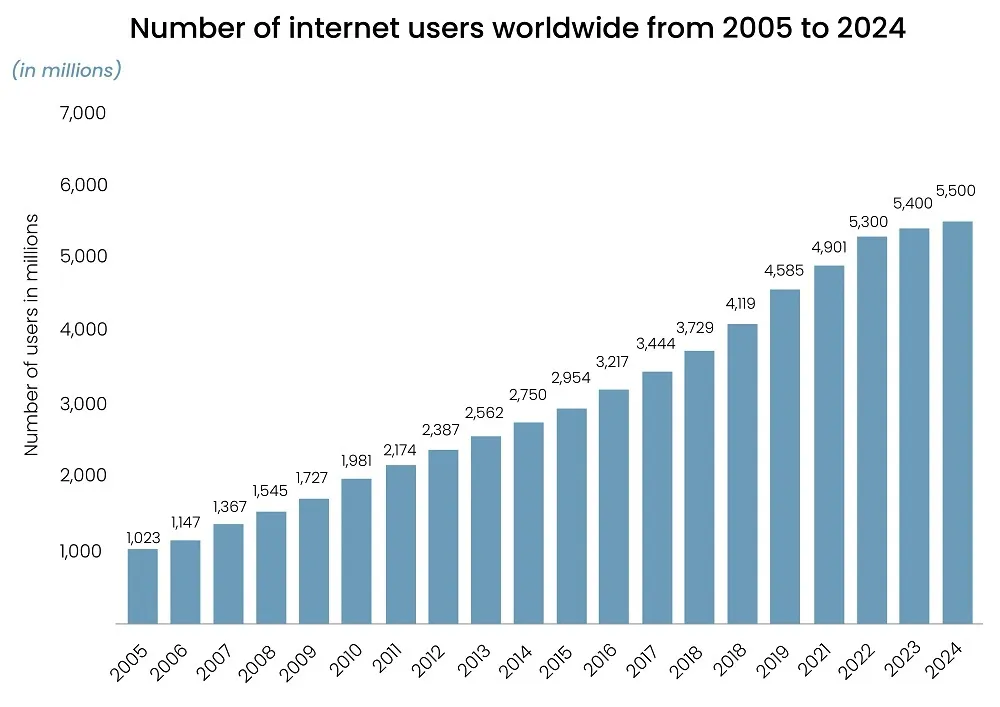
These figures prove that the influence of digital marketing is rapidly increasing, and now, it has become a must have tool for your business!
Key benefits of digital marketing for small businesses.
We now understand the power of the internet; now we are ready to explore what are the key benefits of digital marketing for small businesses. I have discussed it in the sections below:
Cost effective
Digital marketing is cost-effective because of its low entry costs, precise and accurate audience targeting. Digital marketing campaigns have significantly lower costs than traditional media like TV, print ads, allowing small businesses to start with a low budget. Also, it allows for a highly effective targeting of the audience, based on demographics, interests, and behaviours.
It allows us to track campaigns and their performance in real time. We can easily understand what is working and what is not, and then optimize and cut spending on ineffective channels, and make adjustments to maximize the impact of the budget. The combination of targeting, measurability, and optimization often leads to better ROI(return on investment) than traditional marketing. Digital campaigns are easily scalable up or down based on their performance, thus offering flexibility and adaptability, which is difficult in traditional marketing.
Wider audience reach
Digital marketing helps us to reach a wider audience in many ways. It allows businesses to connect with their audience anywhere in the world, regardless of their physical location. While in traditional marketing, this is not possible. Global reach is limited in traditional marketing, but in digital marketing, there are no limits. Traditional marketing has limited channels like TV, radio, newspapers, and banners, and they are all one-way communication. But in digital marketing, we have very precise channels for connecting with our audience.
Social media platforms like Facebook and Instagram allow for direct interaction, community building, and very targeted advertising to any specific group. Through social media , we can also create our community of loyal customers, where they interact with the content that businesses share with them. Nowadays, people search on popular Search Engines like Google before buying anything, and digital marketing provides us a way to show our ads on search engine result pages, right in front of them. Digital channels enable real-time engagement and interaction, allowing businesses to build relationships and gather valuable insights from their customers. Businesses can get direct feedback from their customers, which they can use to improve and optimize their services and products.
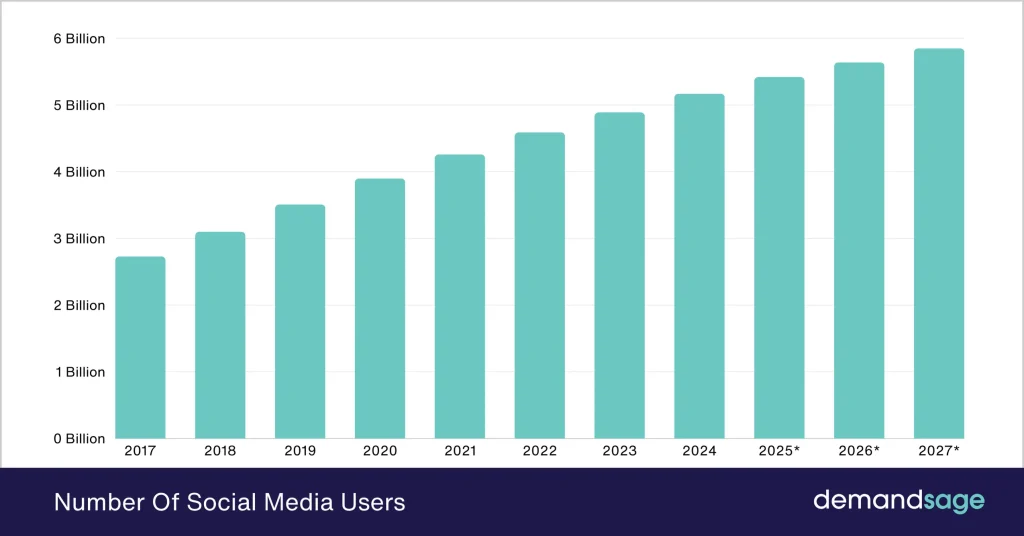
The image shows the rise of social media usage in the past 10 years.
Better targeting options
Digital marketing offers far better options of targeting options than traditional marketing. It targets audiences by leveraging user demographics, online behaviour, interests, field of study, hobbies, and many more aspects with the help of precision tools like Facebook and Instagram, Search Engines, etc. These things are impossible with traditional marketing. Traditional marketing is a broad, very specific approach. The data-driven tactics and strategies of digital marketing lead to more effective messaging, better ROI, and higher conversion rates.
Campaigns can be tailored, adjusted, and personalized in real time based on performance matrices. By the use of data, businesses can segment their audiences in relevant groups, so that marketing messages reach the most relevant potential customers. Advertisers can also create personalized messages for these specified groups, like emails or ads, based on past interaction, which significantly increases engagement. It is very difficult in traditional marketing to know that the advertisements are reaching the right audience.
Measurable results and analytics
Digital marketing is a way ahead of traditional marketing in terms of getting measurable results and analytics. It uses different types of tools, like Google Analytics and social media insights, where businesses can find the key performance indicators. On the other hand, traditional marketing lacks direct measurement, causing difficulty in tracking the ROI. There are various tools for emails, which provide data on email rates, click-through rate,s and conversions from email campaigns. Traditional marketing does not provide detailed, data-driven insights into customer behavior and the effectiveness of the ad campaign.
Builds stronger customer relationships
Digital marketing builds stronger customer relationships than traditional marketing. It offers are two-way communication method, where the customers can directly contact and give feedback to the business. Through social media platforms, brands can directly interact with their customers, respond to comments, and even run contests, giveaways, creating a more personal and engaging brand identity.
Brands can also build online communities with their loyal customers, which creates a sense of belonging among their audience, encouraging word-of-mouth and deeper brand loyalty. There are various tools like email marketing and CRM systems, which allow businesses to create messages based on customer history and preferences, which enhances the customer experience and improves the relationship.
Improve brand awareness and credibility
Digital marketing helps in improving brand awareness and credibility in many ways. Digital platforms like social media, search engines, and content marketing offer a cost-effective way to reach a broad and highly specific audience, which significantly increases brand recognition. It allows for precise targeting of audiences based on demographics, interests, behaviour, and hobbies, which ensures that the marketing messages are delivered to the most relevant potential customers.
Through content marketing, creating high-quality, engaging, and informative content, such as blogs, articles, reels, and videos on YouTube, helps in establishing a brand authority and providing value to consumers. Engaging directly with consumers through social media platforms builds familiarity and improves the relationship, creating a personal bond with the customers. Digital channels facilitate real-time interaction and quick responses to customer queries, improving trust and loyalty. Brands can also encourage and manage positive online reviews and testimonials, which significantly improve customer perception towards the brand and build trust.
Increases conversion and sales
Digital marketing provides various online channels, like social media, email, and search engines, to reach a specific audience with a more targeted and personalized marketing message, which improves the quality of leads that are generated. Tracking the performance data allows businesses to optimize their strategies for higher ROI by focusing on what works for them and cutting wasted spending. Effective and cost-efficient digital marketing strategies generate high-quality leads, which in turn help in more conversions. Digital marketing also offers more accurate, robust analytics that track consumer behaviour and the performance of the campaign.
Provide equal opportunity to compete with bigger brands
Digital marketing believes in equality. No matter whether the business is small or a unicorn, it provides equal opportunities to both of them. It offers cost-effective, targeted strategies that allow small businesses to compete with bigger brands in the market. Also, the ability to accurately track results allows businesses to optimize their campaign and improve their performance. It helps in better resource utilization. Small businesses do not need a massive budget to run a digital marketing campaign. It is more budget-friendly than traditional marketing, which makes it accessible for small businesses to invest in their marketing effort and get better roi.
Long term growth and sustainability
According to research by Qastco and Green Socials, a brand that shows consistency in transparency and sharing valuable content builds trust, which is crucial for converting consumers into loyal customers. Showing people a brand’s commitment to sustainability and aligning its messages with environmental values, businesses can attract and connect with consumers who share the same values, which leads to a more engaged and long-lasting customer base.
Another research by OCP Academy and NEXD shows that digital marketing inherently reduces the need and usage of paper, which significantly decreases a company’s carbon footprint, as compared to traditional print advertising. Digital marketing offers scalable and cost-effective solutions for reaching global audiences, without any geographical barrier, which is a bit difficult or near impossible in traditional marketing.
Practical tips for a small business getting started with digital marketing
Given below are some practical tips for businesses that are just getting started with digital marketing:
- Identify your target audience first
- Build your online presence
- Create high-value content
- Engage properly with your audience
- Track your performance and optimize it
- Hire an agency that has good experience in digital marketing services.
Common mistakes small businesses should avoid in digital marketing
Here is a list of common mistakes small businesses commit when starting:
- No clear strategy
- Ignoring the target audience
- Neglecting Search Engine Optimization(SEO)
- Ignoring Mobile Optimization
- Low quality of website design
- No consistency on social media platforms
- Focusing only on sales
- Neglecting the data and analytics of the campaigns
FAQs
What is SEO in digital marketing?
SEO stands for Search Engine Optimization. It is a process of optimizing the search engines like Google to rank our websites in the SERP(search engine results page), when a user searches for something related to our business.
What is the first step in digital marketing?
The first step in digital marketing is to define our goals and objectives. What is the primary goal of our digital marketing campaign? When you decide what your goals are, then you can choose the appropriate digital channels, develop strategies.
Can I start digital marketing with no experience?
Yes, you can definitely start digital marketing with no experience at all. There are many tutorials and courses available on YouTube for free, which you can use to start your journey. Many successful digital marketers start with no experience and build skills over time.
Why is digital marketing important for business today?
Digital marketing is important for businesses today because it boosts online visibility, reaches a target global audience, cost-effective than traditional marketing, and builds trust and loyalty with consumers. It also provides measurable, data-driven insights about campaigns, which can be used to optimize our ads and increase customer engagement.
When did the digital marketing era begin?
The digital marketing era started with the growth of the Internet in the early to mid-1990s. The first clickable banner ad was launched in 1994, and then the launch of Search Engines like Google and Yahoo.
What is the most important benefit of digital marketing for small businesses?
There are many benefits of digital marketing for small businesses, but the most important one is its cost-effective targeting to reach a specific audience, which leads to higher conversion rates and better return on investment.
What is the primary benefit of digital marketing for small businesses?
Digital marketing allows small businesses to reach a wider audience at a lower cost than traditional marketing. Also, digital marketing is more analytic, data-driven than traditional marketing. We can say that this is the primary benefit of digital marketing for small businesses.
What is the cost of digital marketing services for small businesses in India?
Digital marketing services for small businesses in India can cost anywhere between ₹1500 to ₹25000 per month, based on factors like services, expertise, complexity, and client budget.
Conclusion
In the above sections, I have discussed the benefits of digital marketing for small businesses. But, these are not the only benefits it has; there are many more, which we will discuss in upcoming blogs. Nowadays, digital marketing is no longer an option for small businesses- it has now become an important factor for growth and survival. Its benefits are too valuable to ignore. If any small business wants to grow, then digital marketing is the best practice ever. Also, digital marketing is favourable for small businesses because it is very cost-effective, provides real-time analytics, and helps in building good customer relationships through social media.
Very insightful! The article clearly explains why digital marketing is superior to traditional advertising for small enterprises, particularly with its focus on cost-effectiveness and the ability to track results. The practical tips are a great touch for beginners.